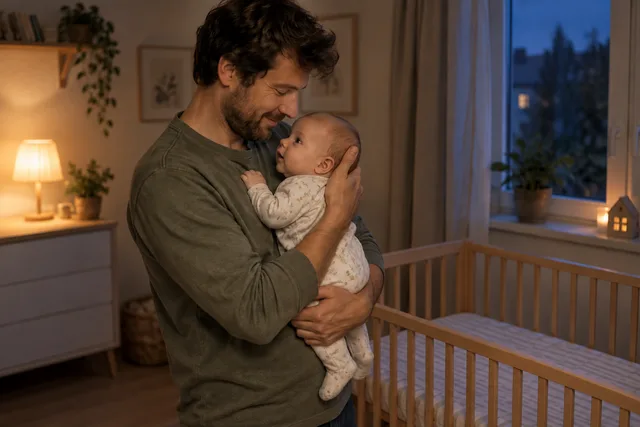


First teeth often appear around six months, but timing varies widely. Drooling, chewing and tender gums can occur. Do not automatically explain fever or diarrhoea as teething: your baby’s overall wellbeing still matters.
Sources: NHS
Separate observation from assumption
- Observe
- What?For example, more chewing
- Consider
- What else?Feeding, alertness and other symptoms
- Act
- SupportSeek professional advice when concerned
When do babies start teething?
Timing is not a competition. Another baby’s visible teeth tell you little about when your own baby’s tooth will emerge. Tooth development should not become an explanation for every unsettled week.
Sources: NHS
Observe signs without attributing everything to teething
Separate what you see from what you suspect: “Chewing their hand more today” is different from “Drinking poorly because of teething.” This distinction helps when several things change together. Record when it began and what else you notice rather than diagnosing from a checklist.
For sleep, ask a specific question: is settling different, or does your baby seem uncomfortable during the day too?
What may help with teething?
Cuddling and quiet play may offer distraction. A suitable teething ring can be chilled according to its instructions, but never frozen. Never attach it with a cord around the neck. Ask a pharmacist or clinician for age-appropriate advice about medicines or gels.
Sources: NHS
A simple approach to unsettled moments
You do not need to try five things at once. Choose one simple way to comfort your baby and notice their response. If another adult takes over, briefly explain what you already tried. That turns conflicting suggestions into manageable support.
The aim is not to make every uncomfortable moment disappear instantly. It is to stay available and take changes seriously.
When to seek support
Get prompt advice for fever, markedly poorer feeding, fewer wet diapers or unusual drowsiness. Do not wait for a tooth to appear. Call your local emergency number for breathing difficulty or unresponsiveness.
Common questions
Does teething cause diarrhoea?
The NHS reports no evidence for this. Diarrhoea needs its own assessment.
Can I freeze a teething ring?
No. Follow the manufacturer’s instructions for chilling in the refrigerator.
Must I stop breastfeeding when teeth appear?
No. Teeth emerging alone are not a reason to stop breastfeeding.
Sources & context
The linked sources support the marked statements. Arithmetic examples and everyday suggestions offer orientation. Sources last accessed on 21 September 2026.
- NHS: Baby teething symptoms
UK public-health guidance.
- NHS: Tips for helping your teething baby
UK public-health guidance.
- NHS: Dehydration
UK public-health guidance.
This guide was created with AI assistance and has not been medically reviewed. More about authorship and our approach.