
Three-month-old babies do not all sleep for the same stretch at night. Night sleep, the longest uninterrupted stretch and total sleep over 24 hours describe different things. A single number cannot tell you whether your baby is sleeping well.
Sources: BIÖG
One night. Three different measures.
Three numbers with different meanings
Here, night sleep means time actually asleep during the night, with known waking periods subtracted. The longest stretch is one uninterrupted sleep. Total sleep also includes every daytime nap.
An invented example: from 8pm to 7am is eleven hours. If your baby was awake for one hour altogether, that is ten hours of night sleep. Add four hours of naps and the total is fourteen hours. These numbers explain the arithmetic; they are not a recommended schedule.
Why sleep charts give different numbers
An average describes children who were observed; a recommendation proposes a range. Neither gives your individual baby a requirement to the minute, and sources may use different age groups.
The AASM does not set a sleep-duration recommendation for babies under four months because variation is large and evidence is insufficient to define a precise health-based range. Do not simply apply the older-infant recommendation to a three-month-old.
Sources: Paruthi et al. (2016)
What to notice in everyday life
Use the same 24-hour window for comparisons, such as one morning to the next. Mark approximate times as approximate and leave missing entries as gaps. There is no need to watch your baby constantly to make the log exact.
Useful questions include: what has changed, how is feeding going, how does your baby seem while awake, and how are the adults coping? A short note may be more useful than a total number of hours.
Keep the sleep space safe
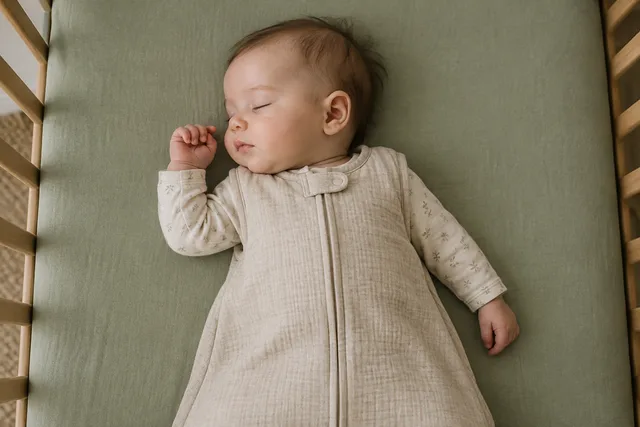
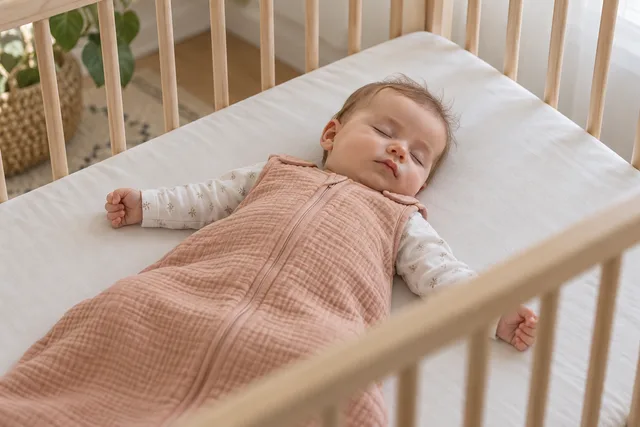
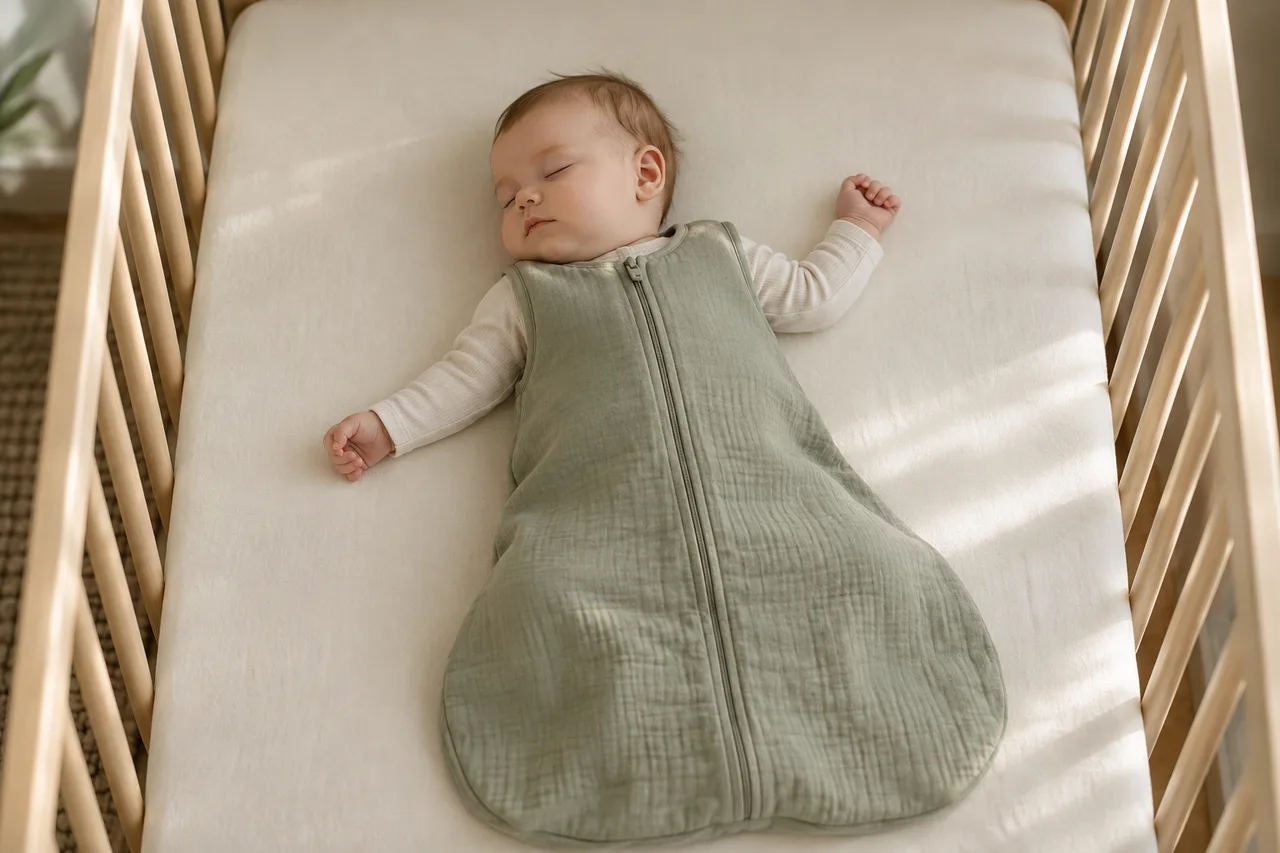
Place your baby on their back on a firm, flat mattress in a clear cot. Keep pillows, loose bedding and soft objects out. The German public-health source recommends a separate cot in the parents’ room during the first year. Safe-sleep principles apply to naps too.
Sources: BIÖG
When to seek support
Seek prompt medical advice for unusual sleepiness, difficulty waking, much poorer feeding or fewer wet diapers. For breathing difficulty or unresponsiveness, call your local emergency number. Ongoing parental exhaustion also deserves support.
Common questions
Must a three-month-old sleep through the night?
No. A fixed number of uninterrupted night hours is not a milestone every baby must achieve at this age.
Does drowsy feeding count as awake time?
The distinction can be unclear at home. Record what you observe and mark uncertain times. An everyday log is not a sleep study.
Sources & context
The linked sources support the marked statements. Arithmetic examples and everyday suggestions offer orientation. Sources last accessed on 20 September 2026.
- BIÖG: Das Wichtigste zum Schlaf im ersten Lebensjahr
German-language health resource; local guidance may differ.
- Paruthi et al. (2016): AASM-Konsens zur Schlafdauer
Professional guidance; see the linked publication for context.
- BIÖG: Sicher schlafen
German-language health resource; local guidance may differ.
- NHS: Dehydration
UK public-health guidance.
- DGSM: Schlafstörungen bei Säuglingen, Kleinkindern, Kindern und Jugendlichen
German-language health resource; local guidance may differ.
This guide was created with AI assistance and has not been medically reviewed. More about authorship and our approach.