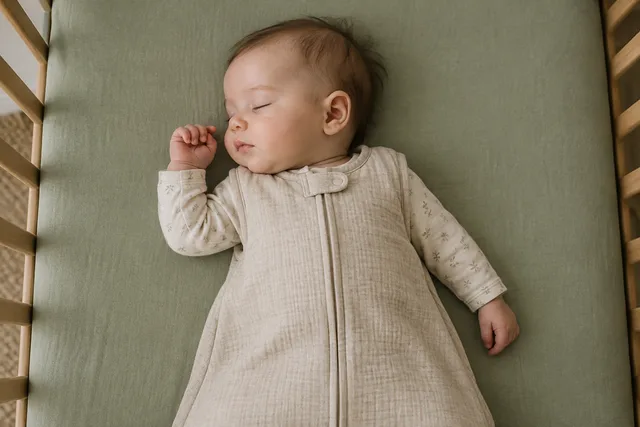

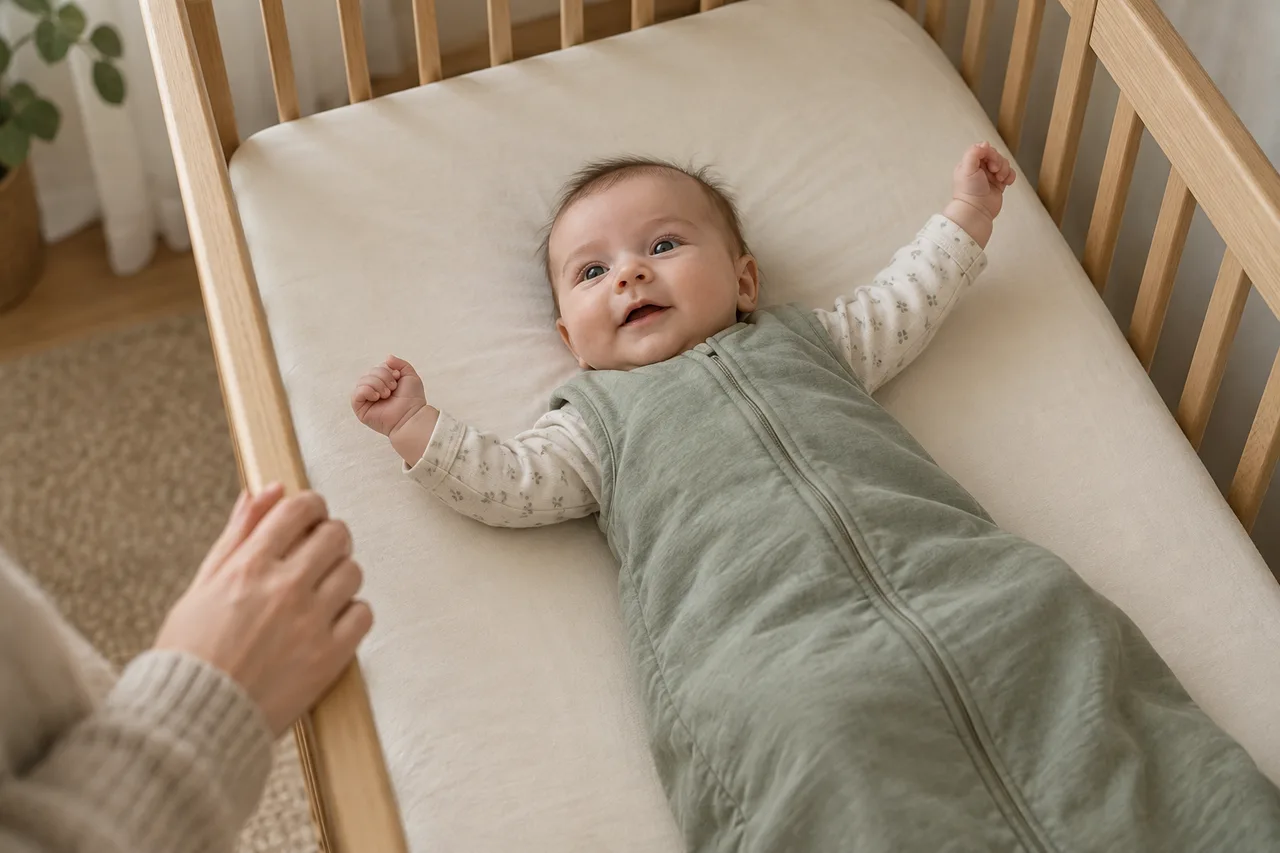
A nap lasting about 30 minutes does not, by itself, mean your baby is sleep-deprived or that you did something wrong. Consider the rest of the day, your baby’s wellbeing and any clear change in their pattern.
Same total. Different distribution.
What half an hour cannot tell you
At home, a clock cannot reveal which sleep stage your baby was in. Even a very regular duration does not measure a sleep cycle. A short stretch alone therefore cannot explain why your baby woke.
Ask what happened before and after. A refreshed baby, renewed tiredness and visible discomfort raise different questions.
Sources: DGSM
One nap is part of a whole day
Our illustration compares two invented distributions: two one-hour naps and four half-hour naps both total two hours. They are not age-specific plans. They simply show why one nap’s length does not describe the total.
The same total does not guarantee the same wellbeing either. Do not use the illustration to deliberately create more short naps or fewer long ones.
Three useful notes
For a manageable observation, record the start and end, how your baby seemed afterwards and anything unusual that day. For example: “Asleep around 1pm, awake around 1:30pm, then alert.” Mark estimates.
If you offer support to resettle, watch the response. There is no universal minimum duration you must achieve through repeated attempts, and you do not need a new method after every waking.
Short naps still need a safe space
The same safe-sleep principles apply to naps and nights. A short sleep does not make soft surfaces, pillows or loose objects safer.
Think about your own break too. Someone else can take over a daily task if the expected rest time disappears. Support does not have to depend on a longer nap.
Sources: BIÖG
When to seek support
Seek advice if your baby seems persistently affected, feeds poorly or sleep is placing a heavy strain on your family. Unusual sleepiness or difficulty waking needs prompt help, not another schedule adjustment.
Common questions
Is 30 minutes always one complete sleep cycle?
No. An observed duration at home cannot reliably identify a sleep stage.
Must I extend every short nap?
There is no universal minimum justified by that duration alone. Consider other sleep and your baby’s wellbeing.
Sources & context
The linked sources support the marked statements. Arithmetic examples and everyday suggestions offer orientation. Sources last accessed on 20 September 2026.
- BIÖG: Das Wichtigste zum Schlaf im ersten Lebensjahr
German-language health resource; local guidance may differ.
- NHS: Helping your baby to sleep
UK public-health guidance.
- DGSM: Schlafstörungen bei Säuglingen, Kleinkindern, Kindern und Jugendlichen
German-language health resource; local guidance may differ.
- BIÖG: Sicher schlafen
German-language health resource; local guidance may differ.
- NHS: Dehydration
UK public-health guidance.
This guide was created with AI assistance and has not been medically reviewed. More about authorship and our approach.