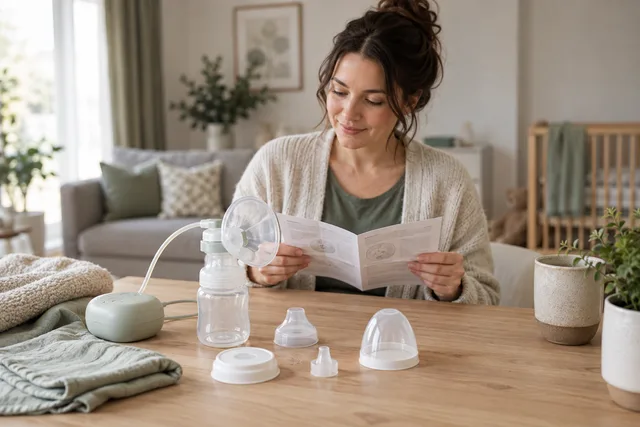

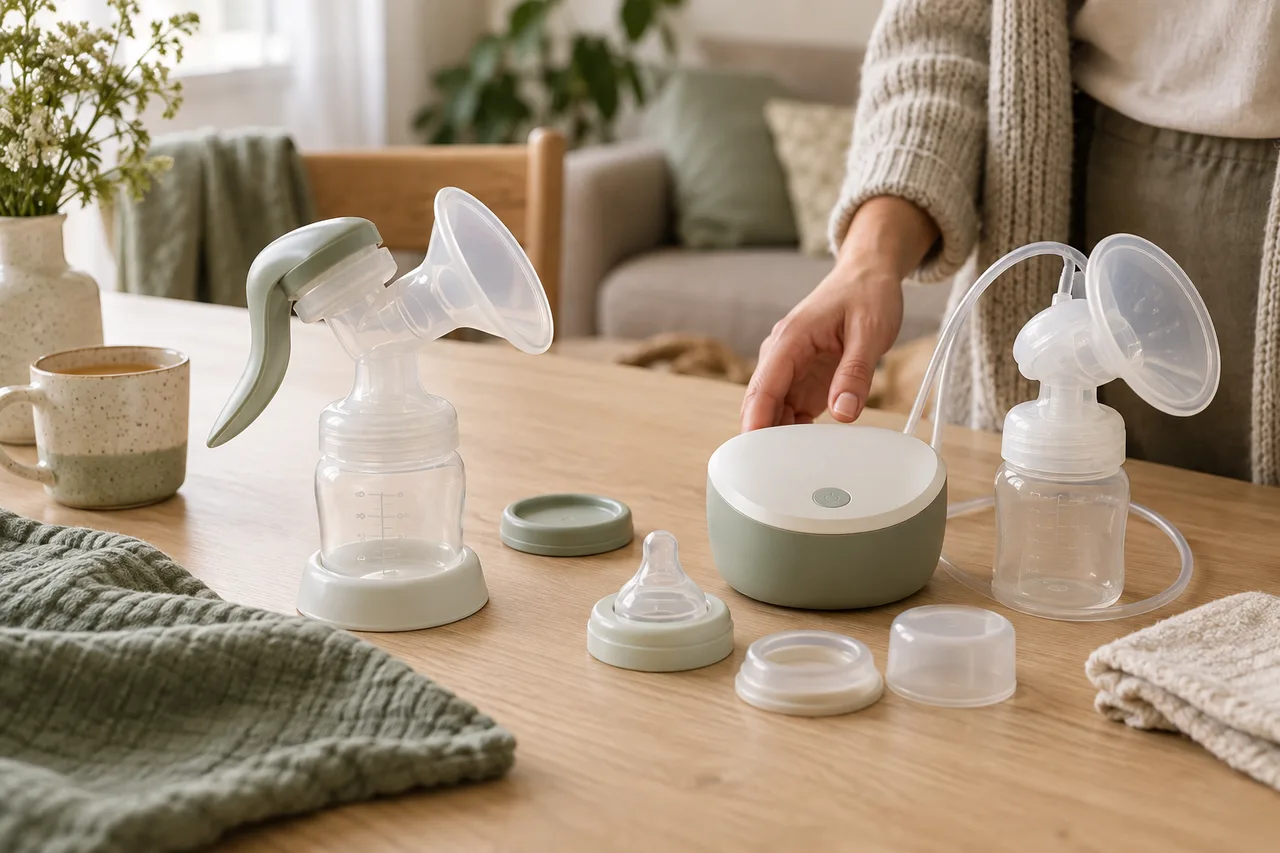
The right breast pump depends on how often, where and why you express. Look for a comfortable breast shield, manageable cleaning and available spare parts. Get advice if you pump regularly or for medical reasons.
Sources: FDA
Your comparison checklist
- Use
- FrequencyOccasional or regular?
- Comfort
- FitSuitable shields available?
- Daily life
- HandlingCleaning, transport and spare parts
Start with your routine
Write down how often you plan to pump, where and how much time is realistically available. Preparing an occasional feed differs from daily expressing during longer separation.
A manual pump may be practical for occasional use. An electric pump supplies the pumping action; pumping both sides together can save time. More technology does not automatically mean a better match.
Sources: FDA
Fit before maximum suction
The breast shield needs to fit you. Before buying, check available sizes and how fit is assessed. Persistent pain or skin injury while pumping needs attention.
A useful purchase decision goes beyond motor power. Ask about adjustable settings, spare parts and practical support. A product photograph cannot demonstrate your individual fit.
Consider cleaning and transport
Look at the parts that need taking apart after use and the required cleaning process. A short checklist covering storage, power and transport helps comparisons.
A suitable bag may matter on the move; an organised surface may matter more at a fixed pumping spot. Plan safe cooling and transport for the expressed milk too. Our storage guide covers that separately.
Buy, rent or accept a used pump?
Sharing or renting is appropriate only for devices designed for multiple users, with the required personal accessories. A used pump is not suitable for sharing simply because it looks clean.
Before renting, ask about cleaning, accessories, returns and cost. If you need a pump for medical reasons, your care team can help you find a suitable one. Whether costs are covered depends on local rules.
Sources: FDA
When to seek support
Seek support for pain, skin injury or uncertainty about your baby’s intake. Choosing a device does not replace feeding or medical advice.
Common questions
Is electric always better?
No. Your routine and individual fit matter too.
Can I use a friend’s pump?
Only if the device is explicitly designed for multiple users and the required personal accessories are used.
Does a small pumped volume prove low supply?
No. One pumping amount cannot tell you this. Ask for a check of your baby’s feeding, diapers and growth too.
Sources & further information
The sources for this guide are linked below. Examples and everyday tips help explain the topic; they are not a personal plan for your baby. Sources last accessed on 21 September 2026.
- FDA: Choosing a breast pump
Professional guidance; see the linked publication for context.
- NHS: Expressing and storing breast milk
UK public-health guidance.
- CDC: Breast Milk Storage and Preparation
US public-health guidance; the storage table follows this source.
- FDA: Buying and renting a breast pump
Professional guidance; see the linked publication for context.
- NHS: Is my baby getting enough milk?
UK public-health guidance.
This guide was created with AI assistance and has not been medically reviewed. How we create our guides.