

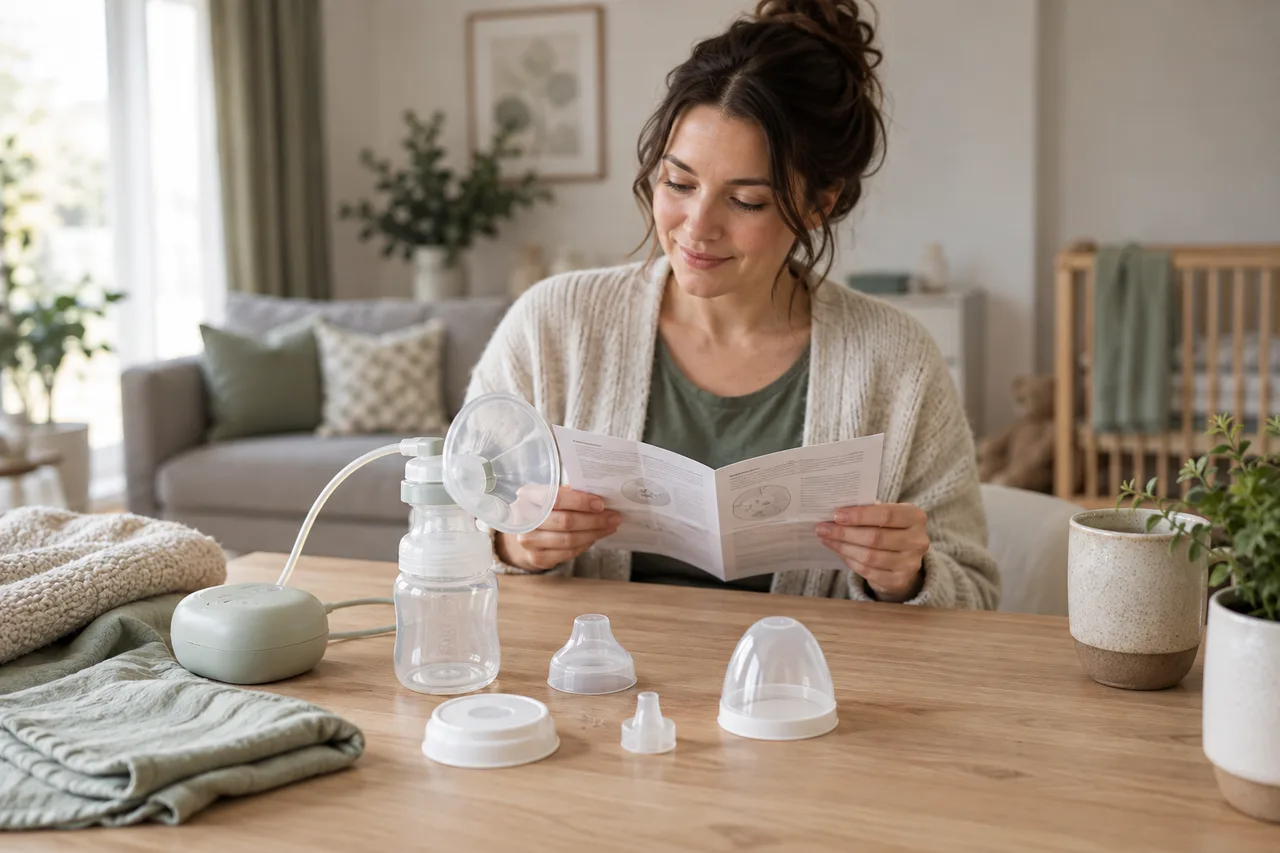
Your reason for expressing and your baby’s feeding needs shape the routine. An occasional absence needs a different plan from exclusive pumping or feeding a premature baby. One expressed amount cannot reliably measure your total supply or what your baby takes at the breast.
Three questions before pumping
- Purpose
- Why?Occasionally, regularly or exclusively
- Comfort
- Does it fit?Fit and comfortable suction
- Intake
- How is baby?Feeds, wet diapers and growth
Start with the reason
Are you planning an occasional feed with another caregiver, returning to work, or supporting a baby who cannot yet feed effectively at the breast? These situations need different support. Agree a routine with a qualified breastfeeding professional for regular or exclusive pumping.
A large freezer stash is not a necessary goal for every family. Additional pumping increases demand on the breast and is not automatically helpful for pain or oversupply.
Prepare clean equipment and start comfortably
Wash your hands and follow cleaning and sterilisation instructions for your pump and collection containers. Assemble equipment as directed. Premature or ill babies may need stricter handling procedures.
The breast shield should fit comfortably. Begin with low suction and increase only while comfortable. Stronger is not automatically better. Pain, rubbing or bruising are reasons to stop and have fit and technique assessed.
Sources: NHS
How often and for how long?
There is no single timing rule for every purpose. Replacing whole feeds needs a different plan from expressing occasionally. Ask someone qualified to demonstrate hand expression if useful.
Avoid judging yourself against photographs of full bottles. Time of day, practice, equipment and a recent feed can influence the result. Feeding behaviour, wet diapers and growth matter more than one pumping photograph when assessing intake.
Afterwards: label and store safely
Label a suitable milk container with date and time and follow reliable storage guidance. Our linked breast milk storage guide explains CDC timings for healthy, full-term babies.
When another person gives the milk, discuss hunger and fullness cues too. An available bottle is not a target that must be finished.
When to seek support
Seek timely help for persistent pain, injury or a hot swollen breast with illness. Poor feeding, difficulty waking or markedly fewer wet diapers require medical assessment.
Common questions
Does a small pumping amount mean low supply?
Not automatically. The expressed amount alone is not a reliable intake test. Seek a feeding and growth assessment if worried.
Should pumping hurt?
No. Pain or injury calls for a review of fit and use.
Do I always need an electric pump?
No. Hand expression, a manual pump or an electric pump may suit different circumstances.
Sources & context
The linked sources support the marked statements. Arithmetic examples and everyday suggestions offer orientation. Sources last accessed on 21 September 2026.
- NHS: Expressing and storing breast milk
UK public-health guidance.
- NHS: Is my baby getting enough milk?
UK public-health guidance.
- NHS: Mastitis
UK public-health guidance.
- CDC: Breast Milk Storage and Preparation
US public-health guidance; the storage table follows this source.
- NHS: Bottle feeding advice
UK public-health guidance.
- NHS: Dehydration
UK public-health guidance.
This guide was created with AI assistance and has not been medically reviewed. More about authorship and our approach.