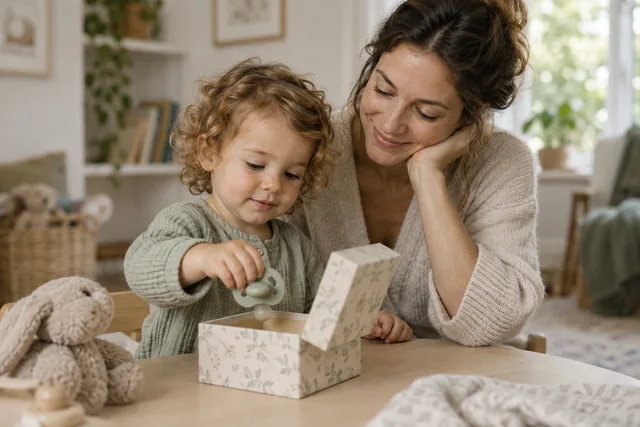

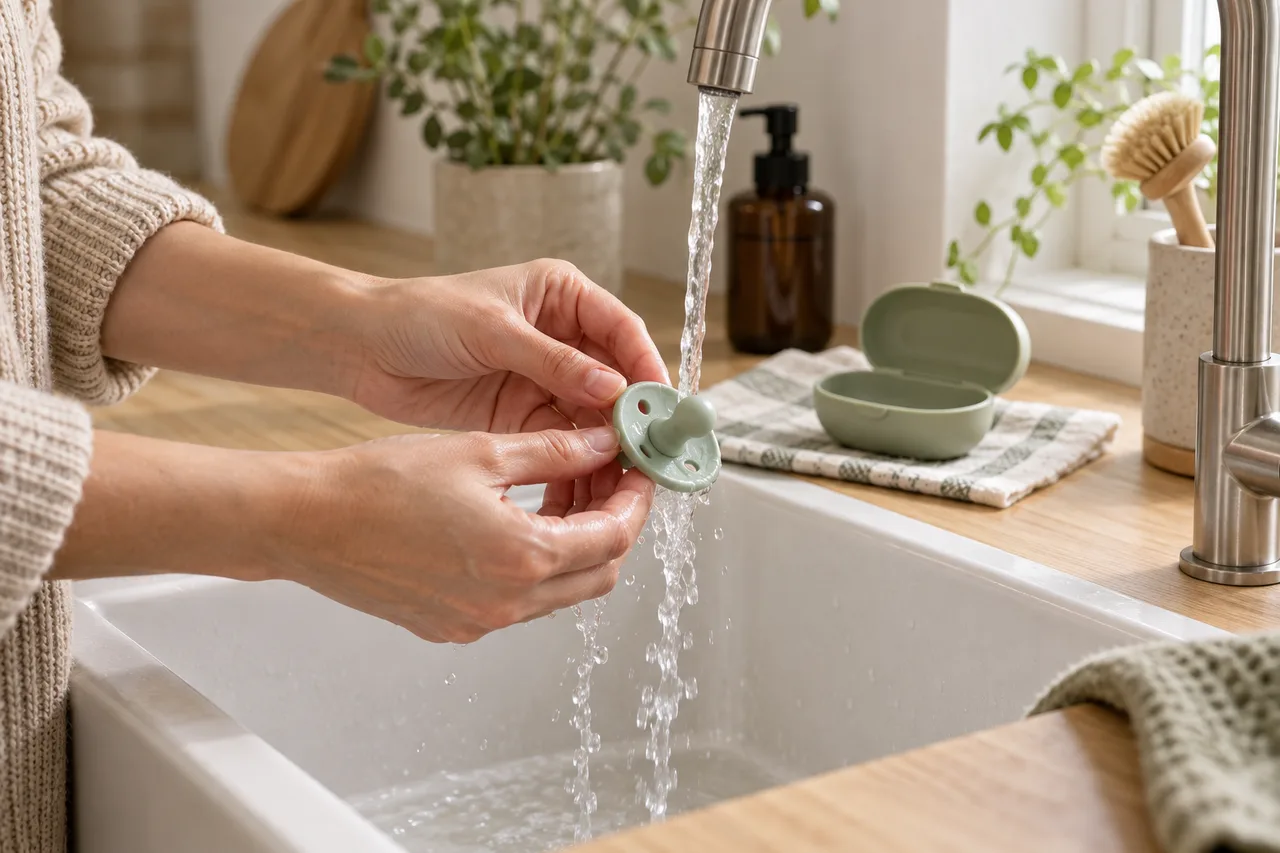
Clean the pacifier as the manufacturer instructs and remove visible dirt. Whether you can also boil or sterilise it, and how, depends on the product. There is no single boiling time that suits every pacifier.
Sources: Just One Norfolk NHS · NHS Healthier Together
A small hygiene routine
- Wash
- Remove residueClean as instructed
- Treat
- Suitable methodUse only approved methods
- Inspect
- Before useCheck cooling and condition
Washing and sterilising are different steps
Washing removes dirt and residue. Sterilising then reduces germs further. A quick rinse does not replace it. Use only a method the instructions say is suitable for your pacifier.
Read your product’s instructions before first use. Some cases have an additional function; others are only for carrying. Do not apply one case’s instructions to another.
Sources: Just One Norfolk NHS
If you plan to boil a pacifier
First check that the material and every part are approved for boiling. Follow the manufacturer’s directions for water, time and handling afterwards. Ask the manufacturer if instructions are unclear or missing.
Work out of children’s reach. Let the pacifier and any trapped water cool before checking and offering it. Do not substitute an improvised microwave treatment for the specified method.
Sources: Just One Norfolk NHS
Carry a clean spare
A dropped pacifier is easier to deal with when you have a clean spare. Keep clean and used ones separate. A small packing routine can help you remember the spare.
Do not clean it in your own mouth. Your mouth is not a cleaning method. Do not coat it in sugar, honey or sweet drinks either.
Sources: NHS Healthier Together · BIÖG
Clean does not mean undamaged
Inspect the pacifier before use and check it as instructed. Cracks, degraded material, sticky changes or loose parts mean it should no longer be offered. Follow replacement guidance too.
Prematurity, reduced immunity or particular medical needs may require additional hygiene precautions. Ask your care team for a specific routine.
Sources: Just One Norfolk NHS
When to seek support
Discuss hygiene with your care team if your baby has particular health needs. A foreign object causing breathing difficulty is an emergency.
Sources: Just One Norfolk NHS
Common questions
How many minutes must every pacifier boil?
There is no suitable time for every product. Follow your pacifier’s instructions.
Does licking it clean it?
No. Use a clean spare while out and clean the used pacifier properly later.
Can a damaged pacifier still be used?
No. Cleaning does not repair material damage.
Sources & further information
The sources for this guide are linked below. Examples and everyday tips help explain the topic; they are not a personal plan for your baby. Sources last accessed on 21 September 2026.
- Just One Norfolk NHS: Babies needing extra care – early days
UK public-health guidance.
- NHS Healthier Together: Dummies and thumb sucking
UK public-health guidance.
- BIÖG: Schnuller beim Schlafen
German-language health resource; local guidance may differ.
This guide was created with AI assistance and has not been medically reviewed. How we create our guides.