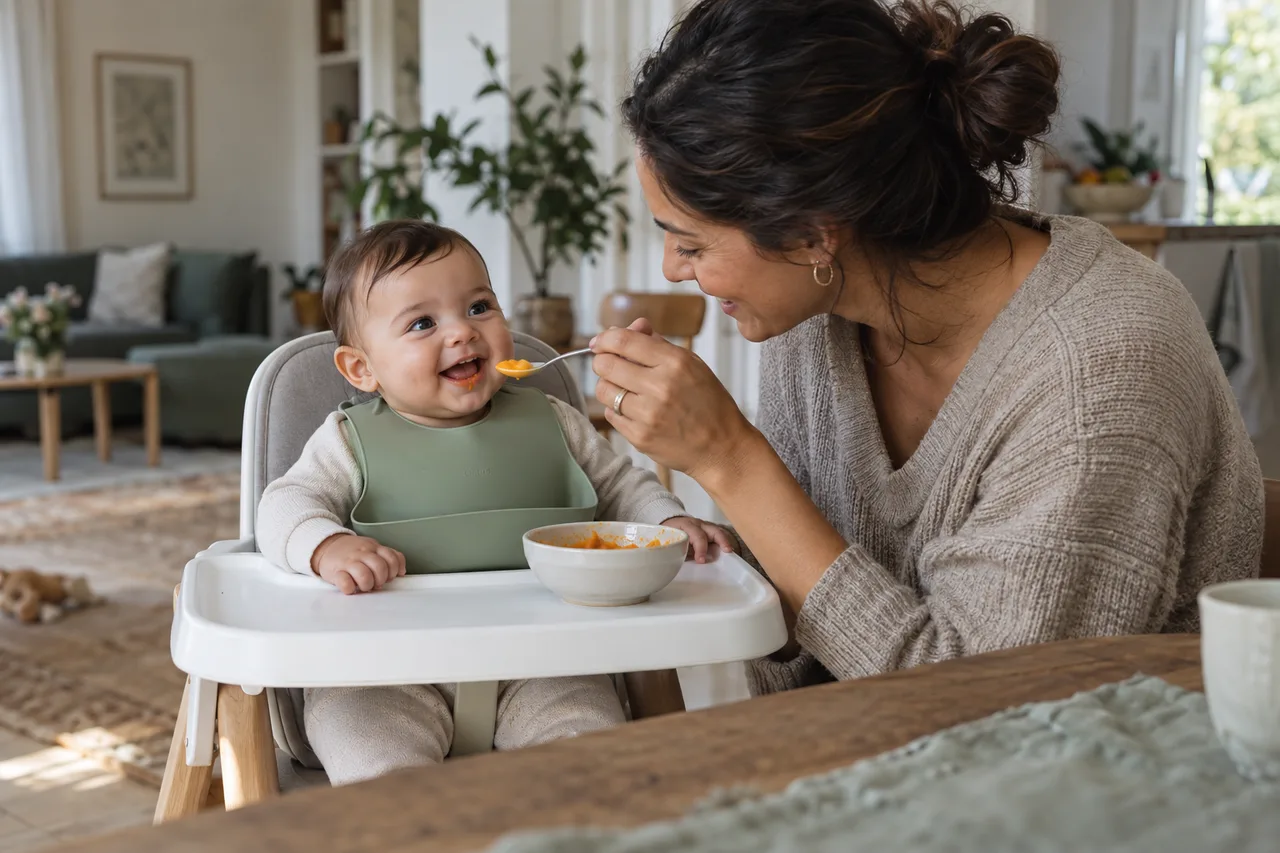
Readiness for solids combines age and development. Look for steady head control in an upright sitting position, coordination to bring food to the mouth and the ability to swallow it. More frequent night waking alone does not show readiness.
Consider three observations together
- Posture
- Steady headUpright for eating
- Coordination
- Eyes · hands · mouthReach purposefully for food
- Mouth skills
- SwallowingManage food in the mouth
When to start solids: Consider age and readiness together
The UK NHS advises starting at around six months alongside signs of readiness. German guidance describes a window after four completed months and by the start of the seventh month. Use your local guidance with your baby’s development rather than mixing different age labels.
Look for signs together
Can your baby hold their head steady and stay upright for food? Can they coordinate looking, reaching and bringing food to the mouth? Can they swallow rather than mainly push food out? The illustration collects observations; it is not a scored readiness test.
Describe what you actually notice instead of marking “passed”. For example, note what support is still needed when sitting upright. That makes a discussion easier.
Sources: NHS
First meals without a quantity target
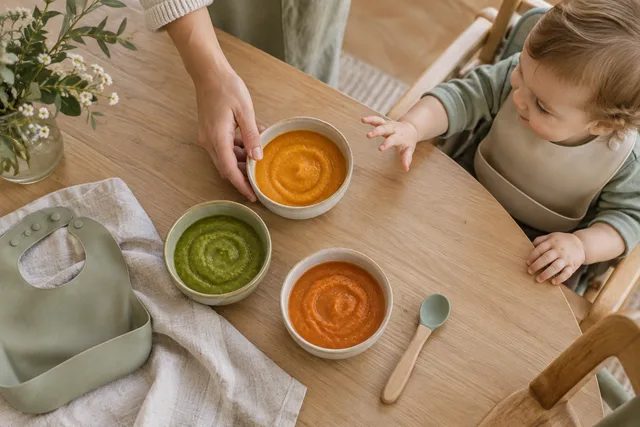
Early meals are also about learning skills and exploring textures. Offer suitable food, stay with your baby while they eat and avoid pushing a set portion. Milk remains an important part of their diet. One rejected meal does not mean the whole process has failed.
Sources: NHS
What is not a shortcut
New night waking does not prove that milk is no longer enough. Solids are not a sleep treatment. Prematurity, swallowing difficulties or specific nutritional concerns call for individual advice.
A small note is enough for everyday use: food offered, what happened and a question to ask. A long shopping list does not establish readiness.
Sources: NHS
When to seek support
Seek professional advice for swallowing difficulties, ongoing food refusal or growth concerns. If your baby cannot breathe during a meal, start appropriate first aid and call your local emergency number.
Common questions
When can I start giving my baby solids?
The NHS recommends around six months alongside readiness signs. German guidance gives a window after four completed months and by the start of the seventh month. Follow local guidance and individual advice.
Is waking more often a readiness sign?
No. It does not establish a need for solids on its own.
Does the first portion have to be finished?
No. Follow your baby’s response and stop when they show fullness or refusal.
Sources & context
The linked sources support the marked statements. Arithmetic examples and everyday suggestions offer orientation. Sources last accessed on 20 September 2026.
- NHS: Your baby’s first solid foods
UK public-health guidance.
- BIÖG: Wann kann ich frühestens mit Beikost starten?
German-language health resource; local guidance may differ.
- NHS: Your baby’s weight and height
UK public-health guidance.
This guide was created with AI assistance and has not been medically reviewed. More about authorship and our approach.