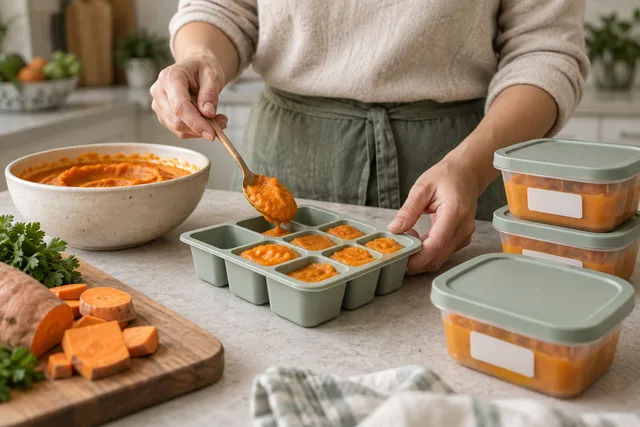

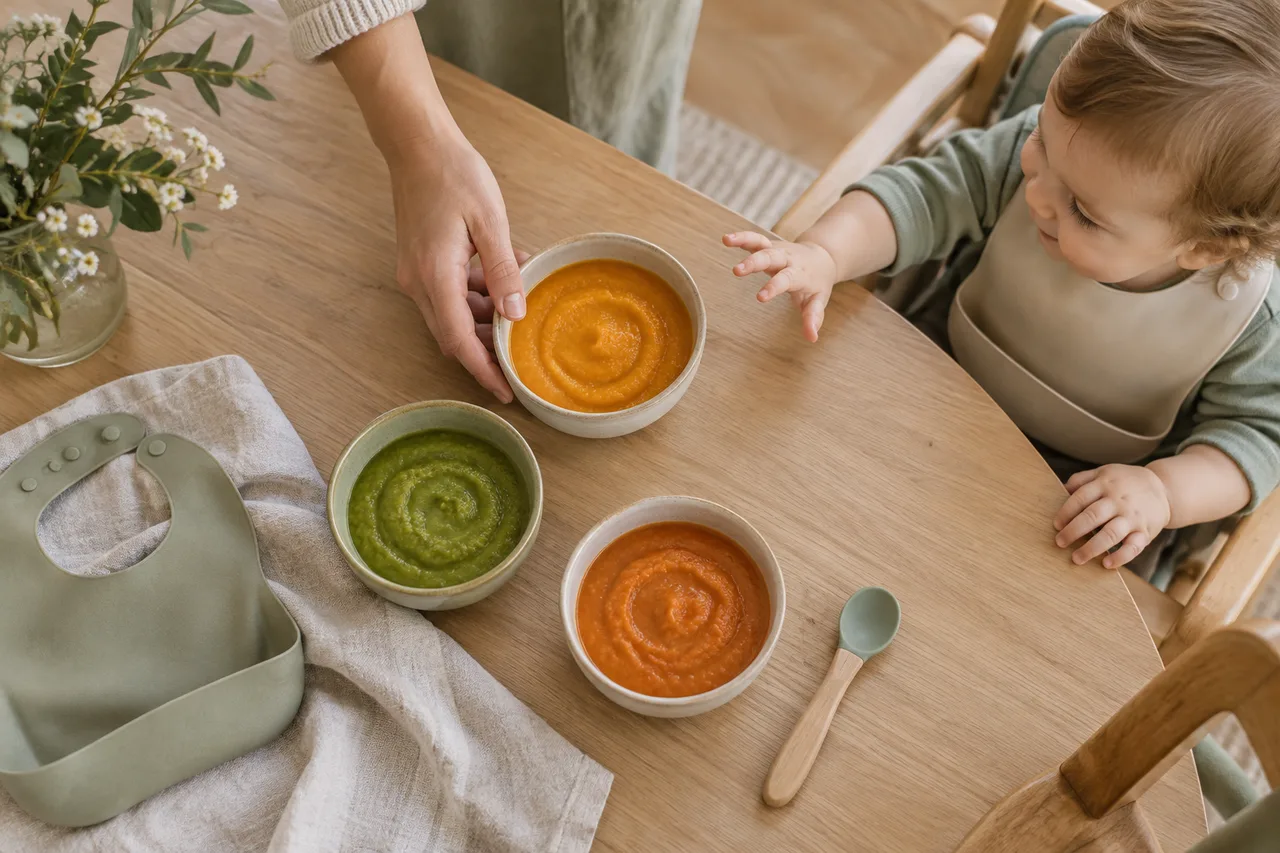
A solids plan helps you choose foods and organise meals. It is not a timetable requiring your baby to finish a set portion by a deadline. Readiness, suitable foods and a safe place to eat matter more than gram targets. Milk feeds remain part of the picture.
The traditional puree plan at a glance
- Start
- Vegetable mealBuild towards a vegetable, potato and meat puree
- Add
- Milk & cerealAnother meal with suitable ingredients
- More variety
- Cereal & fruitA milk-free meal as another addition
When does a plan become useful?
German guidance describes a window after four completed months and by the start of the seventh month; NHS guidance recommends starting around six months alongside readiness signs. These are different national frameworks. Prematurity or health conditions call for individual advice.
What does the traditional German plan contain?
A traditional German puree plan starts with a vegetable, potato and meat meal, later adding milk-and-cereal and fruit-and-cereal meals. It is one way to include different nutrient sources. Vegetarian feeding needs suitable alternatives and appropriate guidance.
Leave space beside any printed plan for what actually happened: offered, tasted, declined, or tried again later.
Sources: BIÖG
An example day without compulsory portions
Choose a calm opportunity when your baby is awake and interested. You might fit a small meal into your normal day while keeping other moments familiar. This example does not mean every baby must start at lunchtime or immediately replace a milk feed.
An example early solids day: usual milk in the morning, a small taste of puree at a calm family meal, then milk as needed. Other milk feeds continue responsively, including in the evening and overnight. Extend the plan as meals gradually develop.
Describe the opportunity rather than grading it: “Tried a few spoonfuls at the family table” is more useful than “Failed to finish again.”
Keep meals safe and responsive
Keep your baby upright and supervise throughout the meal. Texture and shape need to suit their skills. Turning away or losing interest does not call for persuasion. Foods and textures can be offered again; one day does not judge the whole transition.
Sources: NHS
When to seek support
Seek paediatric advice for repeated swallowing difficulties, ongoing food refusal or growth concerns. Call your local emergency number for breathing difficulty or unresponsiveness.
Common questions
How much puree must my baby eat?
This plan sets no compulsory portion. If intake concerns you, growth, milk intake and individual assessment matter.
Must I add a meal every week?
No. This example does not set weekly milestones. Follow development and professional guidance.
Does starting solids immediately replace breastfeeding?
No. Breastfeeding can continue as the transition develops gradually.
Sources & context
The linked sources support the marked statements. Arithmetic examples and everyday suggestions offer orientation. Sources last accessed on 21 September 2026.
- NHS: Your baby’s first solid foods
UK public-health guidance.
- BIÖG: Wann kann ich frühestens mit Beikost starten?
German-language health resource; local guidance may differ.
- BIÖG: Beikost einführen
German-language health resource; local guidance may differ.
- NHS: Your baby’s weight and height
UK public-health guidance.
This guide was created with AI assistance and has not been medically reviewed. More about authorship and our approach.