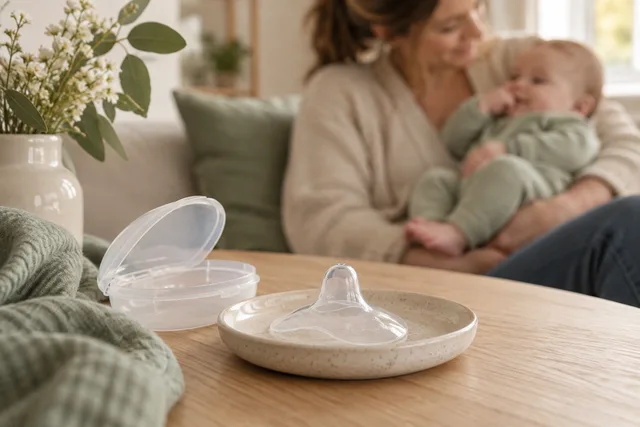


Ask for help early if your nipples are sore. The way your baby takes the breast into their mouth often plays a part, but pain can have other causes. If every feed hurts or you have cracks or bleeding, ask a midwife or breastfeeding professional to watch a feed promptly.
Sources: NHS
Details for a conversation
- When?
- TimingAt attachment, during or between feeds
- Where?
- SideOne or both sides, visible changes
- Changes
- ResponseWhat was adjusted and what changed?
Describe the pain precisely
Does pain start at attachment, continue through the feed, or occur between feeds? Is it on one side or both? Are there visible injuries or changes afterwards? These details are more helpful than adopting an online diagnosis.
A short written note is enough. There is no need to score every minute or store intimate photographs in an app.
Have attachment observed
A different hold may improve comfort, but the actual feed matters. Ask for practical observation and an explanation. Mention nipples that look unusually flattened, distorted or white after a feed.
A cream cannot correct ineffective attachment. A nipple shield should not become an unassessed long-term workaround.
Ease pain and keep your baby fed
Change damp breast pads and avoid rubbing or constricting clothing. If nursing is too painful, discuss gentle milk expression and a feeding plan. Simply shortening every feed does not solve the problem.
An unsuitable pump flange or excessive suction can also cause pain. Higher suction is not evidence of better use.
If adjustments do not help
If pain continues, get it checked again. Burning alone, for example, cannot tell you whether you have an infection. Avoid trying several treatments at once without advice.
Record what actually changed and whether symptoms changed with it. That makes follow-up easier to interpret.
Sources: NHS
When to seek support
Seek early help for cracks, bleeding or persistent pain. Fever, a hot swollen breast or significant illness calls for medical advice. Poor feeding and fewer wet diapers need prompt assessment.
Common questions
Must I endure pain at the start?
No. Pain at every feed or injury deserves early support.
Will cream alone solve it?
Not if attachment problems continue. The cause needs attention too.
Can a pump cause pain too?
Yes, for example through poor fit or excessive suction. Have use reviewed.
Sources & further information
The sources for this guide are linked below. Examples and everyday tips help explain the topic; they are not a personal plan for your baby. Sources last accessed on 21 September 2026.
- NHS: Sore or cracked nipples when breastfeeding
UK public-health guidance.
- NHS: Positioning and attachment
UK public-health guidance.
- NHS: Expressing and storing breast milk
UK public-health guidance.
- NHS: Mastitis
UK public-health guidance.
- NHS: Dehydration
UK public-health guidance.
This guide was created with AI assistance and has not been medically reviewed. How we create our guides.