
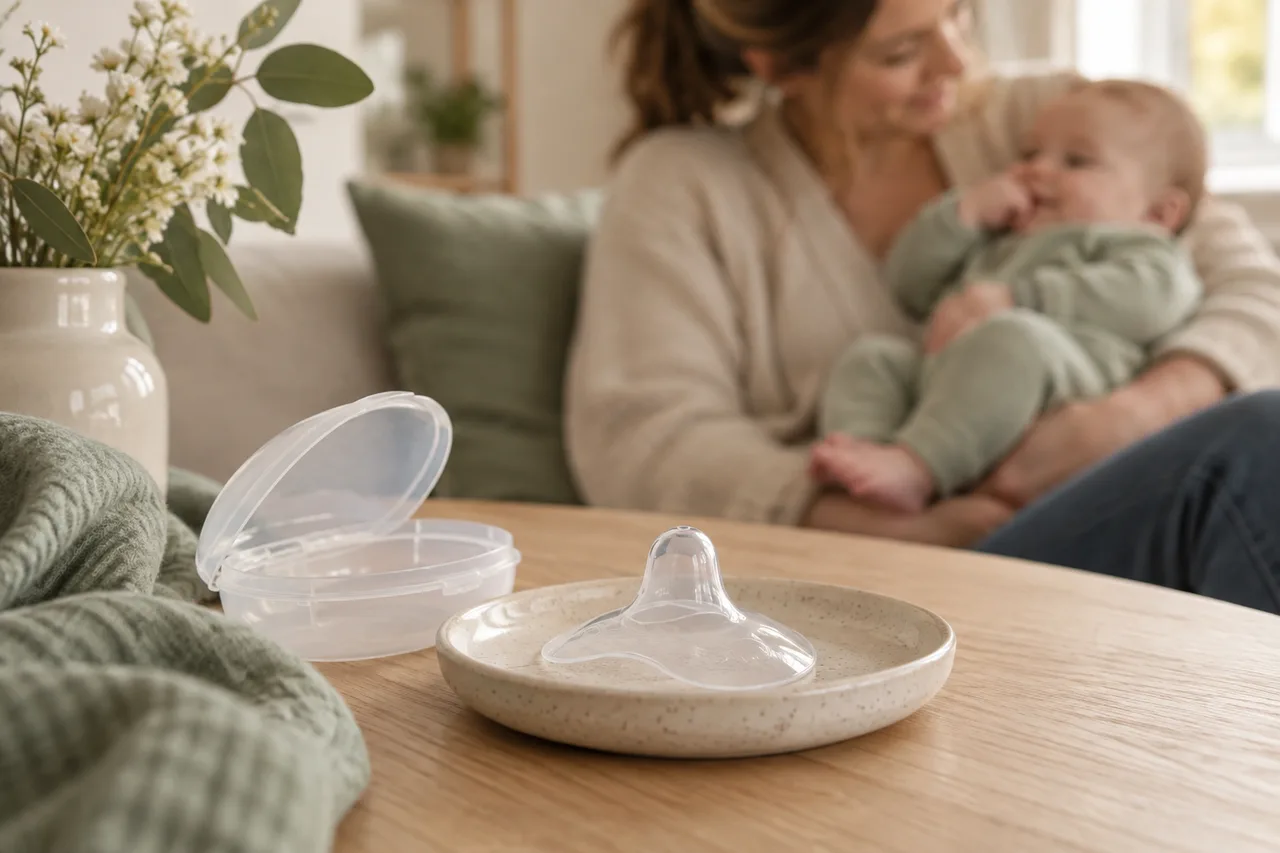
A nipple shield is a thin silicone cover placed over the nipple during feeding. It may help temporarily. Ask a midwife or breastfeeding professional to watch a feed before deciding whether to use one. The fit needs to be right, and your baby needs to get enough milk.
Sources: Kingston and Richmond NHS
Three checks beyond the brand
- Reason
- Why?Identify the particular feeding concern
- Fit
- Comfortable?Observe use during a feed
- Milk
- Enough?Review feeds, diapers and weight
Not every attachment difficulty needs a shield
If feeding is difficult or painful, ask for help checking your position and how your baby takes the breast. A shield alone cannot explain the problem. Sore nipples also need their cause checked.
Explain your aim: less pain, more effective feeding or temporary support. That is more useful than starting with the most popular brand.
Sources: NHS · Kingston and Richmond NHS
Check fit and use in person
Fit matters for comfort and milk flow. Ask someone to demonstrate sizing, application and attachment with your own product. Package labels alone cannot establish effective feeding.
A nipple shield differs from a pump flange or a shell worn between feeds. Their purposes and instructions are not interchangeable.
Sources: Kingston and Richmond NHS
Is your baby getting enough milk?
A shield can change how your baby takes milk. Agree how you will check feeding, diapers and weight. A long feed or visible milk in the shield does not prove your baby has had enough.
If hand expression or pumping is advised, it needs a plan tailored to your situation. Do not automatically add prolonged pumping after every feed without discussing why it is needed.
Sources: Kingston and Richmond NHS · NHS
Cleaning and planning ahead
Follow product instructions for cleaning, sterilisation and replacement. Do not continue using damaged equipment. For premature or ill babies, follow the care team’s instructions.
Discuss when trying a feed without the shield may be appropriate. This is not a deadline or a competition. If your baby becomes distressed or feeds less effectively, adjust the plan with support.
Sources: Kingston and Richmond NHS
When to seek support
Seek prompt medical help for fewer wet diapers, poor feeding or unusual sleepiness. Persistent pain and injury need timely assessment.
Common questions
Do shields always help with pain?
No. Pain needs assessment; a shield is not automatically the right solution.
Which size do I need?
Check fit and a feed with professional support.
Must I stop using a shield immediately?
No. Agree when and how to try without it, while making sure your baby still gets enough milk.
Sources & further information
The sources for this guide are linked below. Examples and everyday tips help explain the topic; they are not a personal plan for your baby. Sources last accessed on 21 September 2026.
- Kingston and Richmond NHS: Nipple shield
UK public-health guidance.
- NHS: Sore or cracked nipples when breastfeeding
UK public-health guidance.
- NHS: Is my baby getting enough milk?
UK public-health guidance.
- NHS: Dehydration
UK public-health guidance.
This guide was created with AI assistance and has not been medically reviewed. How we create our guides.