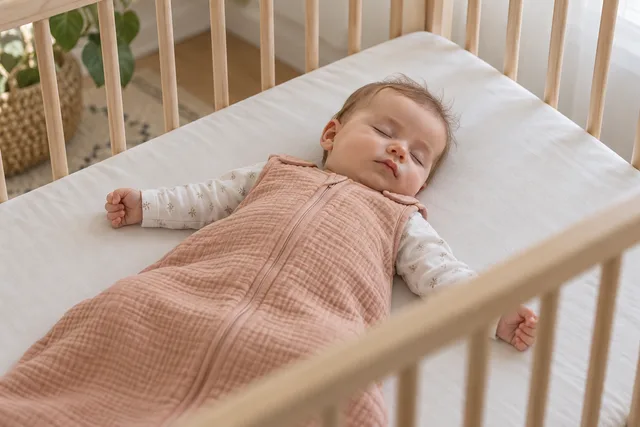


“8-month sleep regression” usually describes a period when parents notice more sleep support is needed again. The label does not establish a cause, starting date or duration. Comfort needs, routines, feeding and possible illness each deserve attention.
Sources: BABYFREUNDLICH · NHS
Three ways to look at changing nights
- Baby
- WellbeingFeeding, alertness and symptoms
- Day
- PatternDescribe naps and transitions
- Family
- SupportWho can share which parts of care?
Not a fixed date in development
Not every change is a regression, and babies do not all pass through the same phase. Ask more precisely: when did settling take longer? How often is help actually needed? Has daytime sleep shifted?
Those questions support a useful conversation. Simply saying “It must be the eight-month regression” can close off other explanations too early.
Sources: BABYFREUNDLICH
Closeness can be part of development
Separation anxiety can emerge in the second half of the first year, making familiar people feel especially important. It does not prove that every night waking has the same cause.
Gentle, familiar daytime separations and reassuring reunions can help. Forcing long separations is not a necessary step in getting through a sleep change.
Sources: NHS
Look at the whole day
Review naps, feeds and evenings across several days. One late nap does not establish a new rhythm. Do not remove daytime sleep merely because a calendar or app expects two naps rather than three.
A simple observation might be: “The last nap has been later for three days.” That describes a pattern, not proof of what caused the nights.
Keep support manageable
Familiar routines can be short: quieter light, recognisable next steps and an available caregiver. For clarity, avoid changing everything at once.
Keep the sleep space safe: put your baby down on their back on a firm, flat mattress in a clear cot. A soft pillow or toy is not a solution for unsettled nights. Share support and arrange breaks where possible.
Sources: BIÖG
When to seek support
Seek medical advice for pain, fever, markedly poorer feeding or unusual drowsiness. Call your local emergency number for breathing difficulty. Persistent sleep problems and severe parental exhaustion also deserve support.
Common questions
How long does the 8-month regression last?
The label cannot predict a reliable duration. Discuss persistent difficulties individually.
Must my baby take two naps now?
No. Age alone does not decide your baby’s naps. Look at the actual pattern.
Is offering more closeness a bad habit?
A need for closeness deserves support. Consider how to make that support sustainable for everyone.
Sources & context
The linked sources support the marked statements. Arithmetic examples and everyday suggestions offer orientation. Sources last accessed on 21 September 2026.
- BABYFREUNDLICH: Unruhige Nächte (2025)
German-language health resource; local guidance may differ.
- NHS: Helping your baby to sleep
UK public-health guidance.
- NHS: Separation anxiety
UK public-health guidance.
- BIÖG: Sicher schlafen
German-language health resource; local guidance may differ.
- NHS: Dehydration
UK public-health guidance.
- DGSM: Schlafstörungen bei Säuglingen, Kleinkindern, Kindern und Jugendlichen
German-language health resource; local guidance may differ.
This guide was created with AI assistance and has not been medically reviewed. More about authorship and our approach.