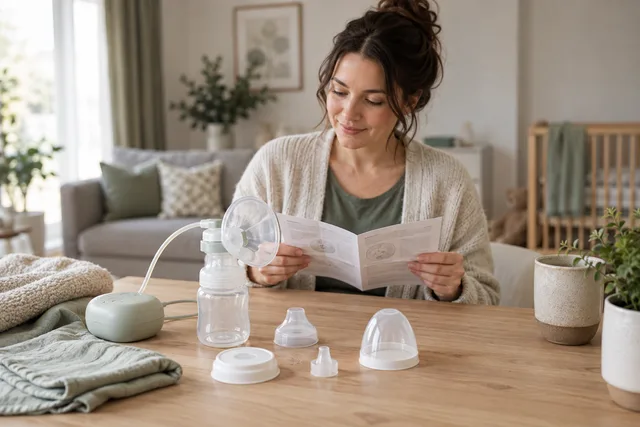


There is no single breastfeeding position for everyone. Your comfort, a well-supported baby and effective, comfortable feeding matter. Written descriptions can introduce holds; watching an actual feed is more useful for assessing attachment.
Sources: NHS · NHS Healthier Together
Three holds, one shared aim
- Cradle
- Across youBaby lies across the front of your body
- Rugby
- Beside youBaby is held along your side
- Laid-back
- SupportedYou are semi-reclined
Cradle and rugby holds
In a cradle hold your baby lies across the front of your body. In the rugby or football hold they lie along your side under your arm. These names describe location, not a guarantee of good attachment. Ask someone to show you appropriate support if you are unsure.
Sources: NHS Healthier Together
Laid-back and side-lying feeding
Laid-back feeding means being semi-reclined with your baby supported against your body. Side-lying feeding is a different hold. These are feeding situations, not advice to fall asleep with your baby on a sofa. Safe sleep guidance still applies afterwards.
Sources: NHS Healthier Together · BIÖG
What to prepare before a feed
Keep water and anything you need within reach. Check that your back and arms feel supported. You should not have to maintain an uncomfortable twist for an entire feed.
Specific observations help: “My shoulder aches after a few minutes” is different from “My nipple hurts during sucking.” Describe them separately rather than labelling everything a bad position.
When changing position is not enough
Persistent pain is not an unavoidable price of breastfeeding. Ask a midwife or qualified breastfeeding supporter to observe a feed, including attachment, swallowing and your baby’s intake.
A photograph or simple overview cannot replace that observation. Images in this guide are illustrative, not instructions for achieving a latch.
When to seek support
Seek timely support for persistent pain, nipple damage or difficulty attaching. Poor feeding or fewer wet diapers also calls for prompt assessment of your baby.
Common questions
Which breastfeeding position is best?
One that is comfortable and works for you both. Pain calls for an individual feeding assessment.
Must I change holds at every feed?
This guide sets no rotation schedule. Your individual situation matters.
Can a picture show whether my baby gets enough milk?
No. Swallowing, wet diapers and growth are part of that assessment.
Sources & context
The linked sources support the marked statements. Arithmetic examples and everyday suggestions offer orientation. Sources last accessed on 21 September 2026.
- NHS: Positioning and attachment
UK public-health guidance.
- NHS Healthier Together: Breastfeeding once you have had your baby
UK public-health guidance.
- BIÖG: Sicher schlafen
German-language health resource; local guidance may differ.
- NHS: Is my baby getting enough milk?
UK public-health guidance.
- NHS: Dehydration
UK public-health guidance.
This guide was created with AI assistance and has not been medically reviewed. More about authorship and our approach.