
To make baby food, cook suitable ingredients thoroughly and mash or blend them to a texture your baby can manage. Check that your baby is ready for solids, choose a balanced meal and keep preparation clean. Homemade and shop-bought food can both work.
Sources: Gesund ins Leben · BIÖG
From pan to spoon
- Prepare
- SuitableConsider readiness and ingredients
- Cook
- SoftCook thoroughly and adapt texture
- Serve
- SupervisedCheck temperature and stay with your baby
Readiness comes before the recipe
A blender does not automatically make any meal suitable for a baby. Check readiness first and discuss uncertainty, especially after premature birth or with developmental needs. Early spoonfuls initially complement milk feeds.
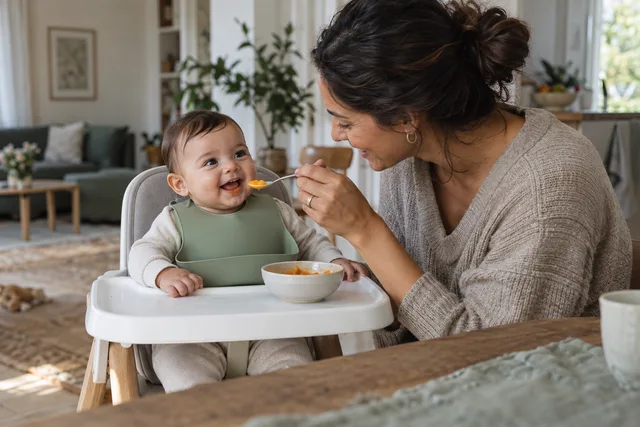
Choose a calm time when your baby is awake and sitting upright with support. Stay with them and follow hunger and fullness cues.
Start with a reliable basic recipe
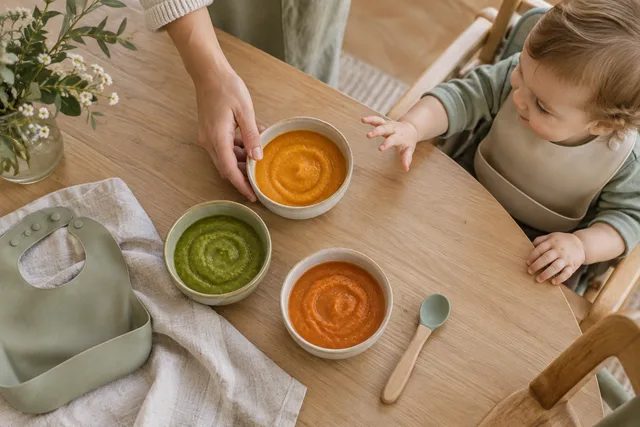
Gesund ins Leben provides recipes for the traditional German vegetable, potato and meat puree, plus a vegetarian cereal version. Follow a complete recipe for ingredients and quantities. Plain vegetable puree is not a long-term equivalent of a balanced meal.
Write a short ingredient list before cooking. It helps you organise supplies and remember newly introduced foods. There is no need to try several new recipes at once.
Sources: Gesund ins Leben · BIÖG
Cook, adjust texture and check temperature
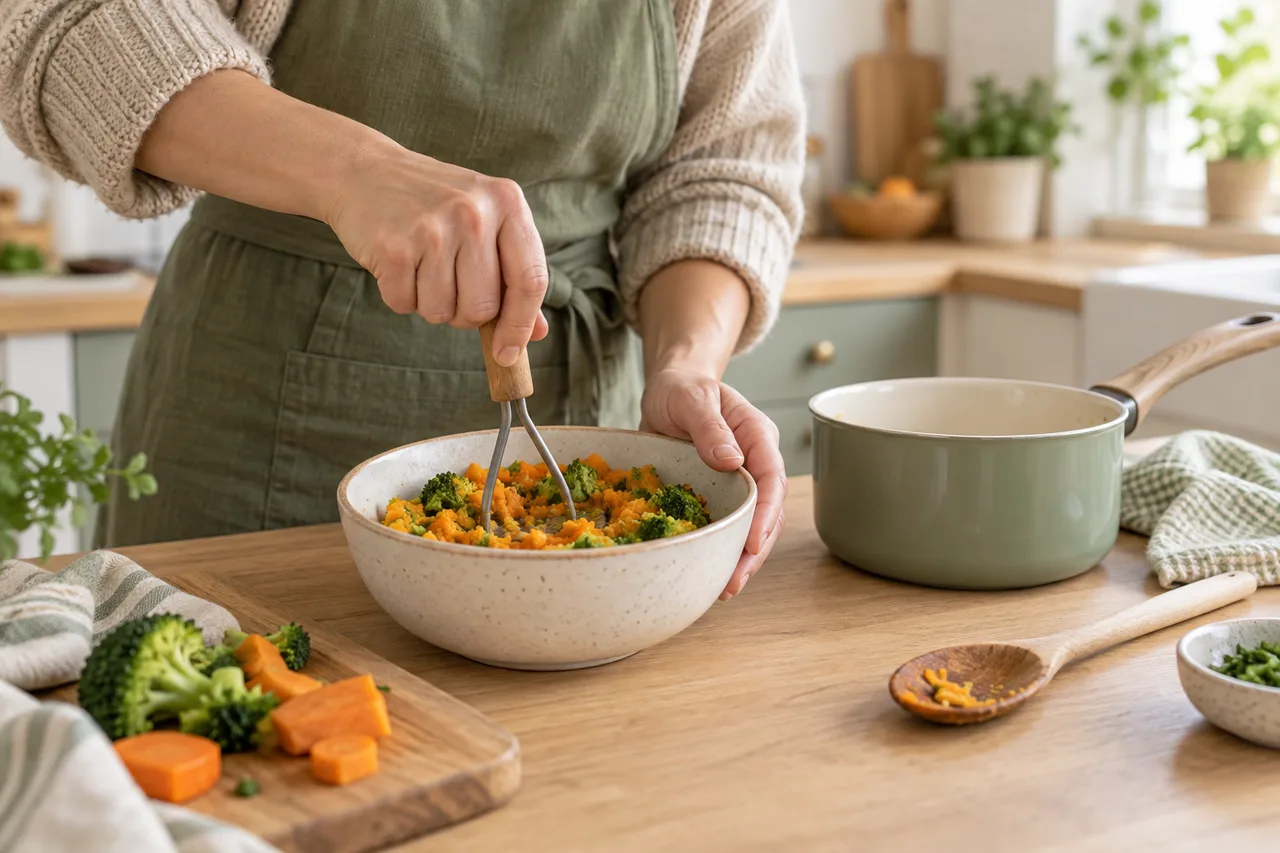
Wash hands, surfaces and ingredients as appropriate. Cook ingredients thoroughly and adapt texture to your baby’s skills. Textures can become more varied as skills develop; food does not need to stay completely smooth.
Let food reach a comfortable temperature and check before serving. Do not add honey during the first year. Added sugar and salt are not needed when starting solids.
Small portions make daily life easier
Serve a little into a feeding bowl and keep the remaining batch separate. Food touched by the used spoon or mouth should not go back into the stored batch.
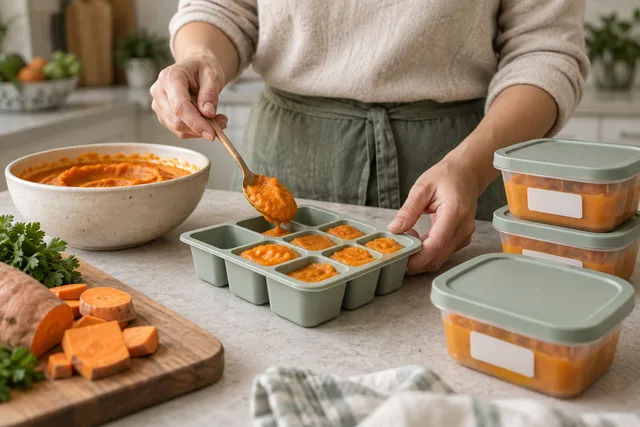
Batch portions need prompt cooling, suitable storage and careful reheating. Our freezing guide covers those steps. A note can help you remember preparation details, but it cannot replace safe storage.
Sources: NHS
When to seek support
Seek individual advice for repeated choking, swallowing problems or poor growth. Breathing difficulty after eating is an emergency.
Sources: NHS
Common questions
Is homemade baby food always better?
No. Suitable shop-bought and homemade meals can both work.
Must every puree be completely smooth?
Texture should follow your baby’s development and skills.
Can I keep leftovers from the feeding bowl?
Do not save leftovers that have been in contact with saliva for a later meal.
Sources & further information
The sources for this guide are linked below. Examples and everyday tips help explain the topic; they are not a personal plan for your baby. Sources last accessed on 21 September 2026.
- Gesund ins Leben: Brei selbst kochen
German-language health resource; local guidance may differ.
- BIÖG: Beikost einführen
German-language health resource; local guidance may differ.
- NHS: Your baby’s first solid foods
UK public-health guidance.
- NHS: Storing and reheating food
UK public-health guidance.
This guide was created with AI assistance and has not been medically reviewed. How we create our guides.